


The science behind mindfulness shows that the practice does more than calm you down. It can change how the brain handles stress, attention and emotion, shaping how you respond to daily life.
How Mindfulness Affects the Brain
Brain imaging studies show that regular mindfulness practice strengthens areas linked to focus and emotional regulation. At the same time, it reduces activity in regions associated with stress and overthinking.
Each time you notice the breath and return attention to the present moment, you reinforce neural pathways that support clarity and steadiness.
Your brain adapts to what you practise repeatedly.
The Amygdala and Stress Response
Deep inside the brain, the amygdala plays a central role in detecting threat and activating the fight or flight response. When stress levels are high, this area becomes more reactive, making everyday situations feel urgent.
Research suggests that mindfulness can reduce amygdala reactivity over time. Challenges still exist, but the brain becomes less likely to respond with automatic alarm.
The Prefrontal Cortex and Clear Thinking
Responsible for decision making, planning and impulse control, the prefrontal cortex acts as the brain’s executive centre. Under ongoing stress, this region becomes less effective, which is why clarity often fades when you feel overwhelmed.
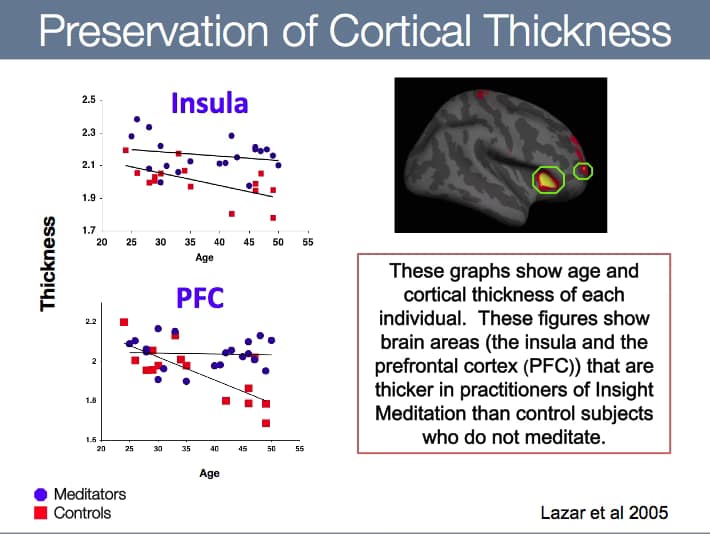
Research by Sara Lazar, Ph.D. proves that mindfulness strengthens attention and supports emotional regulation. Over time, it becomes easier to pause before reacting and choose a more intentional response.
A calmer mind is trained through steady attention.
The Default Mode Network and Overthinking
In moments of mind wandering, the default mode network becomes active. When this network runs too often, it is linked to repetitive thinking and anxiety.
Mindfulness reduces activity in this system, making it easier to step out of constant mental commentary and return to what is happening now.
Neuroplasticity: Why Change is Possible
Neuroplasticity explains why mindfulness can change the brain. Because the brain rewires itself based on repeated experience, small daily practices gradually strengthen circuits linked to awareness and emotional balance.
Change builds through consistency. Even brief moments of mindful attention can support long term resilience.
Extend Your Practice
If you would like to explore this in a guided way, join the Mindfulness Hub Evening Circle. This live online community offers guided practice and shared reflection. You can find details and sign up via www.mindfulnesshub.eu/evening-circle/
You can also explore practical habits in our article on morning mindfulness routine.


